Gorilla Trekking in Uganda
Gorilla Trekking in Uganda
There are experiences that change the way you see the world, and then there is gorilla trekking in Uganda. Standing just a few metres from a wild mountain gorilla watching a silverback tear apart a stalk of wild celery with the casual strength of a creature that could crush stone, hearing the soft grunts of a mother nursing her infant in the undergrowth, locking eyes for a fraction of a second with an animal that shares 98.3% of your DNA is the kind of moment that does not leave you. It settles deep into your memory and stays there for the rest of your life.
Uganda is the single best country in the world for gorilla trekking, and it is not a close contest. With more than half of the world's entire mountain gorilla population living within Uganda's borders, and with two extraordinary national parks protecting them, travellers who come here are treated to an encounter that is raw, intimate, and completely unlike anything available anywhere else on Earth. The mountain gorilla (Gorilla beringei beringei) is one of the most endangered great apes in existence, with a global wild population of fewer than 1,100 individuals. Every trek is therefore not just an adventure it is a front-row seat to one of conservation's greatest success stories
At Calm Africa Safaris, we have spent years perfecting the art of the Uganda gorilla safari. We know the forests, we know the gorilla families, we know the permit system, and above all, we know how to design a gorilla trekking experience that exceeds every expectation. Whether you are planning a focused three-day gorilla trek in Bwindi Impenetrable Forest or a sweeping ten-day Uganda wildlife safari that combines gorillas with chimpanzees, big game, and waterfall boat cruises, we are here to make it happen seamlessly, safely, and unforgettably.
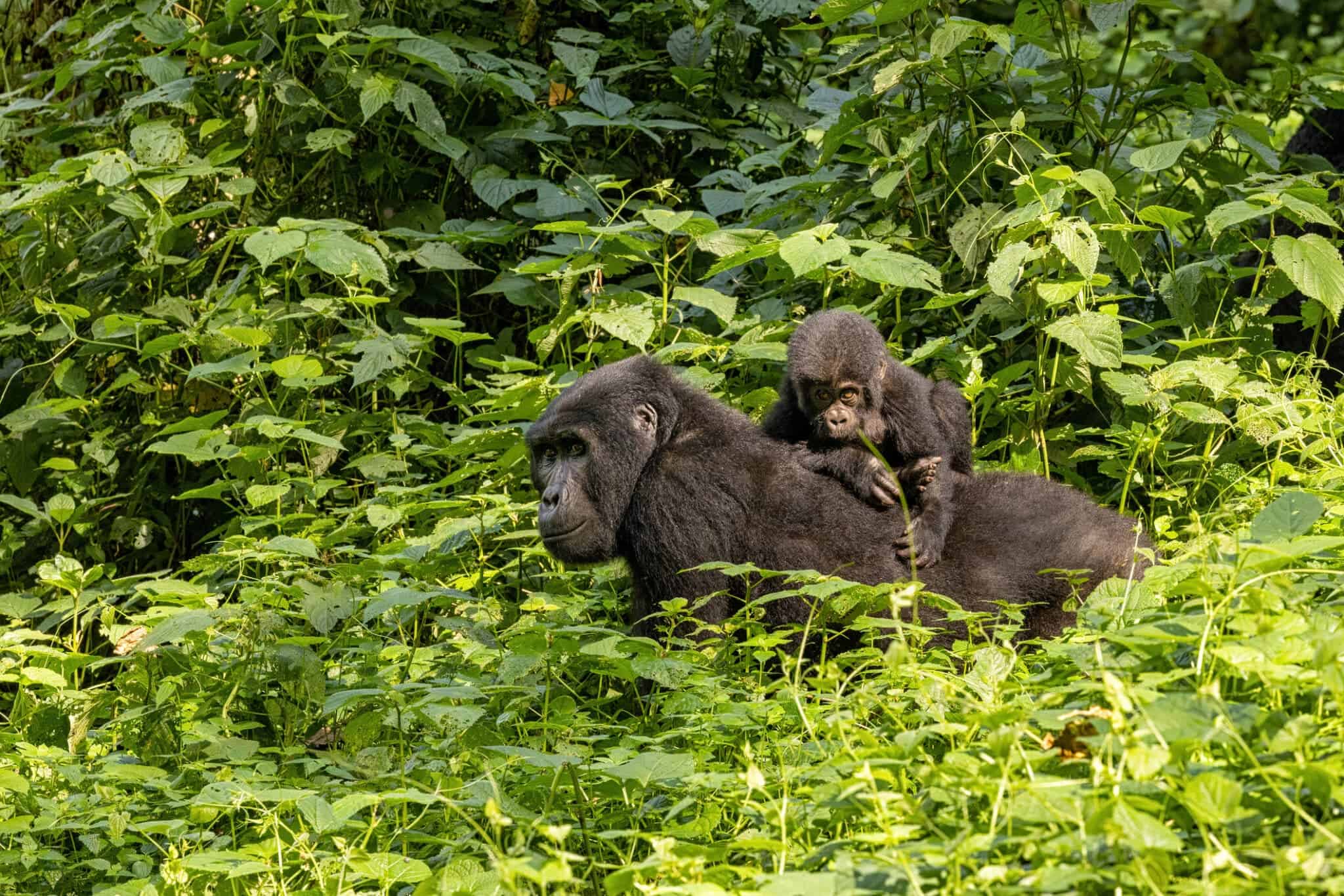
Mountaion Gorillas in Bwindi Impenetrable National Park
Why Uganda Is the World's Best Destination for Mountain Gorilla Trekking
When travellers begin researching gorilla trekking in East Africa, three countries come up consistently Uganda, Rwanda, and the Democratic Republic of Congo. Each has something to offer, but Uganda stands apart for reasons that go well beyond simple price comparison
Uganda is home to more habituated gorilla families than any other country in the world. A habituated gorilla family is one that has undergone a years-long process of gradual human exposure, carried out by dedicated park rangers and researchers, until the gorillas are comfortable enough with human presence to allow controlled trekking visits. Uganda's Bwindi Impenetrable National Park alone has more than twenty such families spread across four distinct trekking sectors, offering a level of access and choice that no other destination can match.
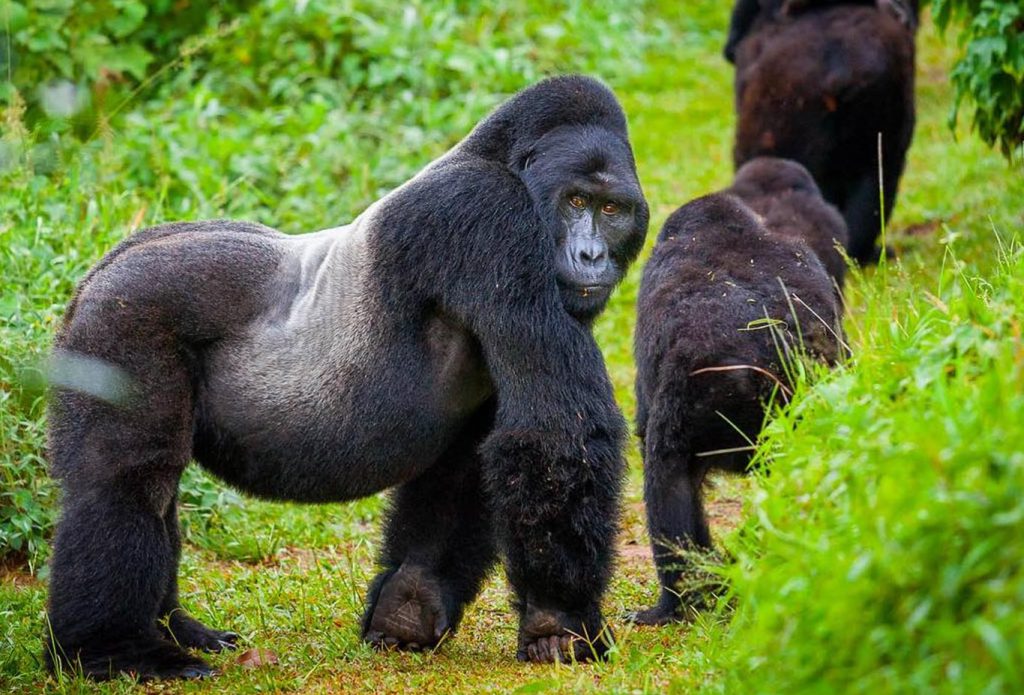
Mountaion Gorillas in Bwindi Impenetrable National Park
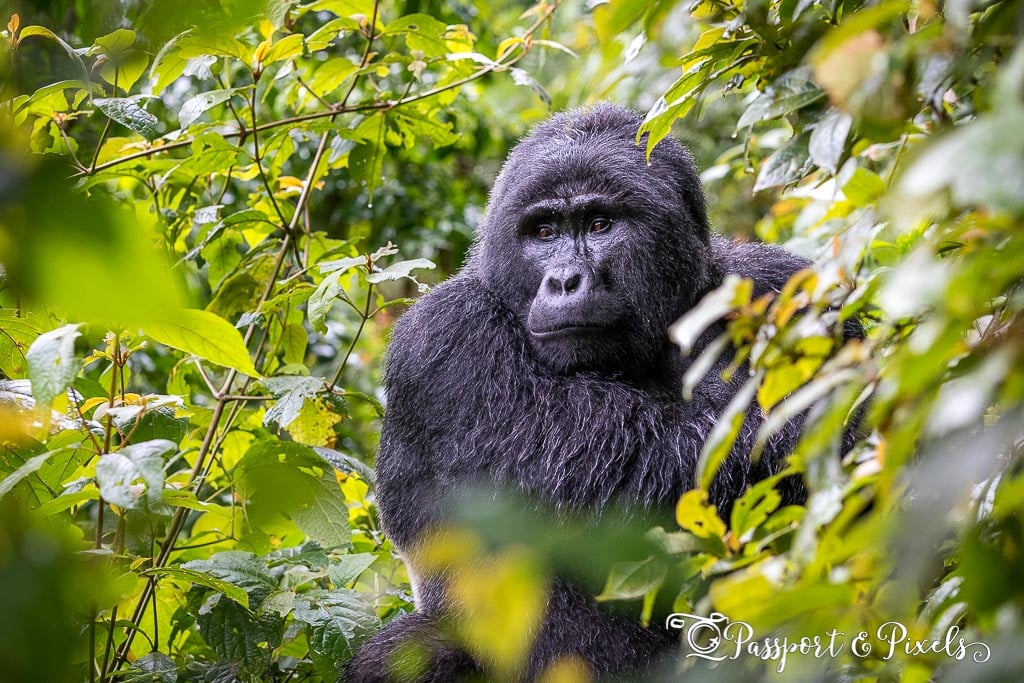
Mountaion Gorillas in Bwindi Impenetrable National Park
The cost of a Uganda gorilla permit is $800 USD per person less than half the $1,500 USD that Rwanda charges for the same one-hour experience. This makes Uganda the destination of choice for travellers who refuse to compromise on the quality of the experience but are equally unwilling to pay a premium simply for branding. Importantly, the quality of the gorilla encounter in Uganda is at least equal to and many experienced safari guides would argue superior to Rwanda's Volcanoes National Park, primarily because the Ugandan forest is denser, wilder, and more authentically adventurous.
Beyond the gorilla encounter itself, Uganda offers a breadth of complementary wildlife experiences that is unmatched anywhere in Africa. On a single Uganda safari, you can trek mountain gorillas in Bwindi, track wild chimpanzees in Kibale National Park, search for tree-climbing lions in Queen Elizabeth National Park, and watch the world's most powerful waterfall on a Murchison Falls boat cruise. No other country on the continent offers this combination of primate diversity, big game variety, and landscape drama within such a compact geography.
Uganda is also a genuinely safe, politically stable, and tourism-friendly destination. English is widely spoken, roads in the southwest Uganda's gorilla country are steadily improving, and the hospitality of the Ugandan people is consistently one of the things travellers remember most warmly. When you choose gorilla trekking in Uganda, you choose a destination that has invested deeply in both conservation and the visitor experience.
Where to Trek: Bwindi and Mgahinga
Uganda's mountain gorillas live across two national parks in the southwest of the country, each with its own distinct character, landscape, and atmosphere.
Gorilla Trekking in Bwindi Impenetrable National Park
Bwindi Impenetrable National Park is the crown jewel of gorilla trekking in Uganda, and one of Africa's most celebrated natural treasures. Covering 331 square kilometres of ancient montane rainforest in the Kigezi Highlands, Bwindi has been continuously forested for more than 25,000 years, surviving the ice ages that stripped vegetation from much of the continent. Today it is a UNESCO World Heritage Site and a globally significant biodiversity hotspot, home not only to mountain gorillas but to 120 species of mammals, 348 species of birds, and more tree species per square kilometre than anywhere else in Africa.
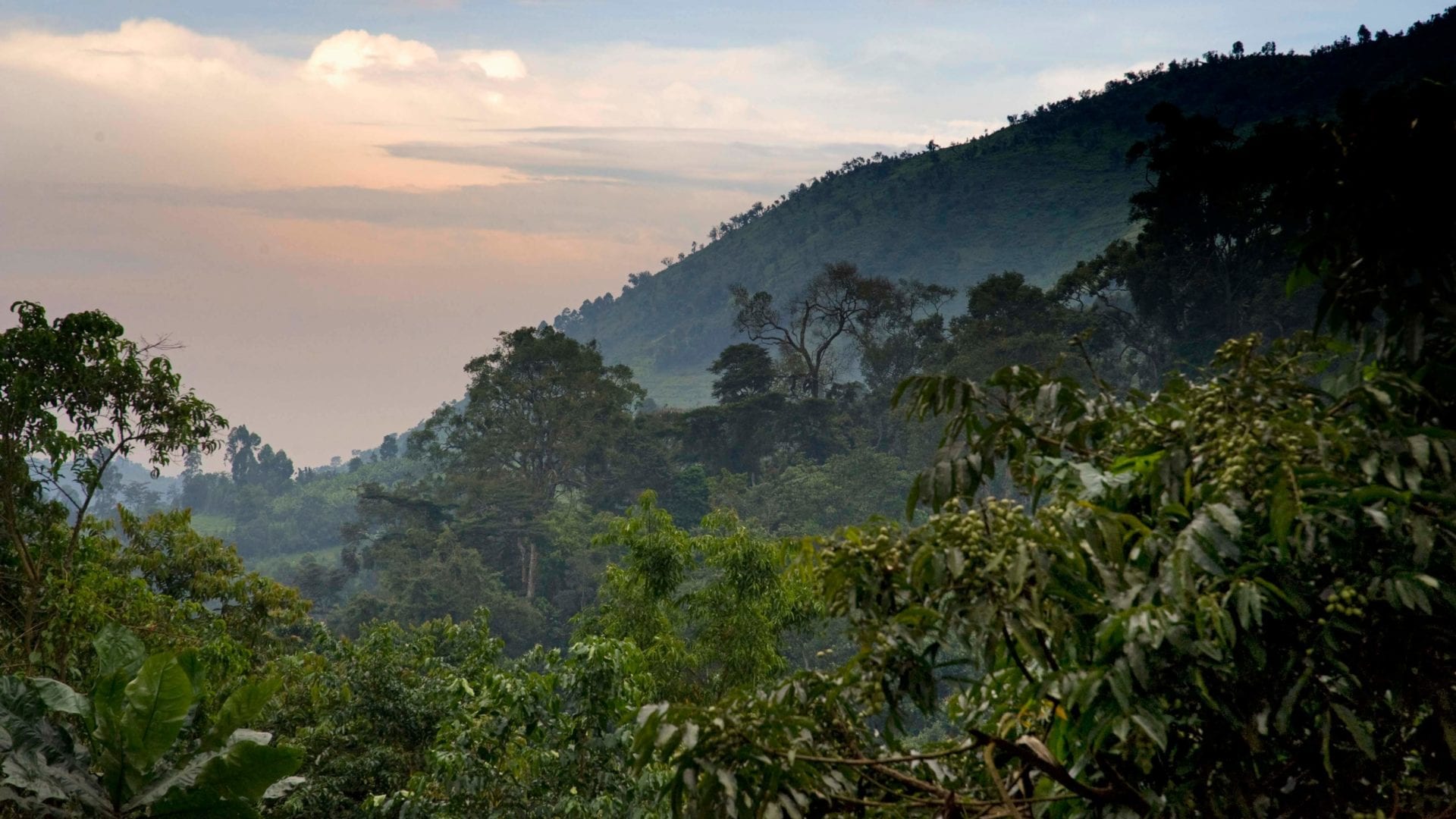
Bwindi Impenetrable National Park
Bwindi is divided into four trekking sectors, each offering a different experience of Uganda's most iconic gorilla habitat.
Buhoma sector
The Buhoma sector in the north is the original gorilla trekking entry point and remains one of the most popular, with well-established lodges ranging from comfortable guesthouses to luxury forest camps. Buhoma's trails pass through some of Bwindi's most spectacular old-growth forest, and the sector is home to several long-habituated gorilla families including the famous Mubare group, Uganda's first ever habituated gorilla family
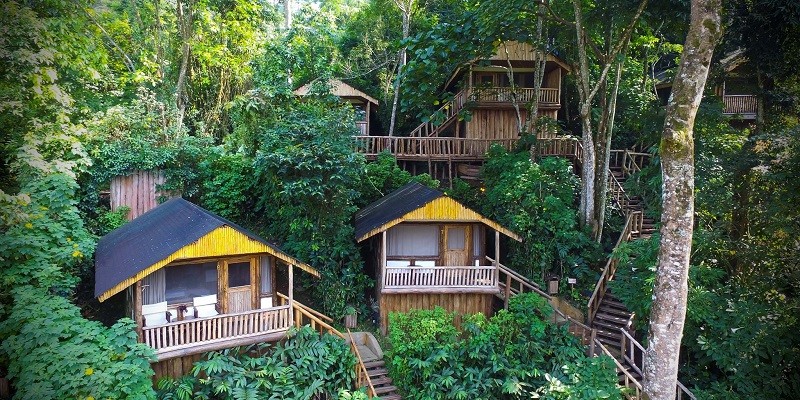
Bwindi Impenetrable National Park Buhoma sector
Rushaga sector
The Rushaga sector in the south has the highest concentration of habituated gorilla families in Bwindi and is the only place in Uganda where you can book a Gorilla Habituation Experience a four-hour extended encounter with a gorilla family that is still undergoing the habituation process. Rushaga is also well-served by a growing range of lodges and is popular for travellers arriving from Rwanda via the Kyanika border.
Ruhija sector
The Ruhija sector sits at the highest elevation in Bwindi, above 2,300 metres, and offers a cooler, cloudier, and in many ways more dramatic trekking environment. The forest here is exceptionally dense and the birdwatching is extraordinary, with several Albertine Rift endemic species found only in this sector.
Nkuringo sector
The Nkuringo sector occupies a dramatic ridge on Bwindi's southern edge, with sweeping views across to the Democratic Republic of Congo and the Virunga volcanoes beyond. The gorilla families in Nkuringo often travel across steep terrain, making this one of the more physically demanding sectors but also one of the most rewarding, particularly for photography.
Gorilla Trekking in Mgahinga Gorilla National Park
Mgahinga Gorilla National Park sits on Uganda's southwestern corner, sharing the Virunga volcanic chain with Rwanda's Volcanoes National Park and the DRC's Virunga National Park. Smaller and quieter than Bwindi, Mgahinga protects the Ugandan section of the Virunga volcanoes and is home to a single habituated gorilla family the Nyakagezi group whose home range shifts between Uganda, Rwanda, and the DRC depending on the season.
Trekking in Mgahinga is a genuinely different experience from Bwindi. The landscape is dramatically volcanic, with bamboo forest giving way to open heath zones on the higher slopes of Mount Muhavura, Mount Gahinga, and Mount Sabyinyo. The Nyakagezi group has in recent years settled more permanently on the Ugandan side, making Mgahinga an increasingly reliable option for gorilla trekking, particularly for travellers who want to combine their gorilla trek with a golden monkey tracking experience in the same park on the same day.
What to Expect on a Gorilla Trek in Uganda A Full Day in the Forest
Understanding exactly what happens on a gorilla trekking day removes uncertainty and allows you to be fully present for one of the most powerful wildlife encounters on the planet.
Your gorilla trekking day begins early, typically between 6:00 and 7:00 in the morning, with a briefing at the park gate or visitor centre. A Uganda Wildlife Authority ranger leads the briefing, covering the rules of the encounter maintain a minimum distance of seven metres from the gorillas at all times, do not eat or drink within their presence, speak in low tones, and never make sudden movements. Flash photography is strictly prohibited. Groups are capped at eight visitors per gorilla family per day, a rule that exists to protect the gorillas' health and ensure that their behaviour remains as natural as possible during the visit.
After the briefing, you set off into the forest with your lead ranger, a tracker, an armed wildlife scout, and any porters you have hired. The work of finding the gorilla family begins the evening before your trek, when scouts follow the group to their night nesting site and radio in a starting position at dawn. Even so, gorillas move constantly, and the length of the trek to reach them can range from under an hour to six hours or more of walking through deep forest. This unpredictability is part of what makes the gorilla trekking experience in Uganda so authentic you are entering the gorillas' world on their terms, not the other way around
The terrain in both Bwindi and Mgahinga is genuinely challenging at times. Trails are often steep, muddy after rain, and threaded with roots and vegetation that requires both hands and feet to navigate. This is not a manicured nature walk it is a genuine forest trek, and it is all the better for it. Hiring a porter is one of the best decisions you can make. At a cost of roughly fifteen to twenty US dollars, your porter carries your bag, steadies you on steep descents, and pulls you up muddy inclines with an outstretched hand. Porter income provides direct and meaningful livelihoods to communities surrounding the park, and we encourage every one of our guests to hire one.
When you finally reach the gorilla family, the world changes. Nothing fully prepares you for the size, the stillness, and the intelligence of a mountain gorilla at close range. A fully grown silverback male can weigh up to 220 kilograms and stand nearly two metres tall, yet move through the forest with a fluid ease that feels almost choreographed. Young gorillas called infants and juveniles play, wrestle, and tumble through the vegetation with an energy and curiosity that is immediately, disarmingly familiar. You are allowed exactly sixty minutes with the family. Most trekkers say those sixty minutes pass in what feels like five.
After your time is up, your ranger leads you back to the park gate, where you are presented with an official Uganda Wildlife Authority gorilla trekking certificate confirmation that you have completed one of Africa's most coveted wildlife experience
Uganda Gorilla Trekking Permits Cost, Booking, and Everything You Need to Know
The Uganda gorilla trekking permit is issued by the Uganda Wildlife Authority and currently costs $800 USD per person for foreign non-residents. Each permit covers one hour with a habituated gorilla family and includes park entry fees and the services of a professional ranger guide. It does not cover accommodation, meals, transport, porter fees, or gratuities.
Gorilla permits in Uganda are among the most sought-after wildlife permits in Africa, and availability is strictly limited. Each habituated gorilla family can receive a maximum of eight visitors per day, and with twenty-plus families across Bwindi and one family in Mgahinga, total daily permit capacity across Uganda is still well below the demand that exists, especially during peak travel seasons.
For travel between June and August Uganda's primary dry season and the most popular time for gorilla trekking permits should be booked a minimum of four to six months in advance. The December to January short dry season is also heavily subscribed and requires early booking. For shoulder and wet season travel between March and May or September and November, permits are sometimes available with shorter notice, though we always advise booking as early as possible to protect your preferred sector and dates.
There is also the Gorilla Habituation Experience, available exclusively in Bwindi's Rushaga sector, which allows you to spend four hours rather than the standard sixty minutes with a gorilla family that is still undergoing the habituation process. The permit for this experience costs $1,500 USD per person and is an extraordinary option for travellers who want a deeper, more immersive gorilla encounter. Accompanying researchers and rangers make this a uniquely educational experience as well.
At Calm Africa Safaris, we manage the full permit procurement process on your behalf. We have established relationships with the Uganda Wildlife Authority, stay up to date with permit availability across all sectors and dates, and advise you on the best sector to book based on your travel dates, fitness level, and preferred lodge location. You simply tell us when you want to trek and we handle the rest
Best Time for Gorilla Trekking in Uganda Season by Season Guide
One of the most common questions we receive from travellers planning a Uganda gorilla safari is when to go. The honest answer is that gorilla trekking in Uganda is rewarding in every month of the year the gorillas are always present, always active, and always extraordinary. What changes with the seasons is trail conditions, lodge pricing, and permit availability.
Long dry season
The long dry season from June through August is the most popular time for gorilla trekking in Uganda, and for good reason. Trails are at their firmest, forest paths are clearer with less ground-level vegetation, and the absence of heavy rain makes for more comfortable trekking and better photography conditions. This is also when the greatest number of international visitors come to Uganda, so permits and accommodation must be booked well in advance.
Short dry season
The short dry season from December through February is another excellent window for gorilla trekking, particularly for travellers in the northern hemisphere taking advantage of the Christmas and New Year holiday period. Conditions are similar to the long dry season, though the very peak of December can see heavy competition for permits around the holiday dates. January is one of our favourite months for gorilla trekking dry, warm, and relatively uncrowded compared to the June–August peak.
long wet season
The long wet season from March through May brings heavy and persistent rains to southwestern Uganda. Trails become slippery and significantly more challenging, and the trek to reach the gorilla families is often harder work. However, the forest during this period is intensely lush and vivid the kind of deep, saturated green that photographers dream about. Lodge rates drop considerably during the wet season, permits are easier to secure, and the overall atmosphere is quieter and more intimate. If you are physically fit and unbothered by rain, a wet season gorilla trek is a genuinely beautiful experience.
Short wet season
The short wet season from September through November is a transitional period that many experienced safari travellers consider the best-kept secret in Uganda. Rains are lighter and more intermittent than March–May, conditions are manageable, permit availability is reasonable, and lodge rates remain below peak season levels. October and November in particular offer an excellent balance of value and conditions that we regularly recommend to our guests
Uganda Gorilla Trekking Safari Packages Find Your Perfect Itinerary
We design every gorilla trekking package around your specific travel dates, interests, fitness level, and budget. No two itineraries are identical. That said, the following packages represent the most popular gorilla trekking experiences that our guests book year after year
Our 3 Days Gorilla Trekking Bwindi package is the ideal choice for travellers with limited time who want to focus entirely on the gorilla encounter without compromise. You fly into Entebbe, transfer to Bwindi either by road through the scenic Kigezi Highlands or by charter flight to Kihihi or Kisoro airstrip trek one gorilla family, and return. It is a focused, powerful experience that delivers everything that matters.
Our 5 Days Gorillas and Queen Elizabeth National Park Safari combines your Bwindi gorilla trek with a full game drive experience in Queen Elizabeth National Park, Uganda's most diverse wildlife reserve. Here, lions, leopards, elephants, hippos, and buffaloes share the savannah, and a boat cruise on the Kazinga Channel is one of Africa's finest wildlife spectacles. This pairing of forest and savannah, primates and big game, is one of the most satisfying combinations in African safari travel
Our 7 Days Uganda Great Apes Safari is the itinerary we are most proud of a primate journey available nowhere else in the world. You trek mountain gorillas in Bwindi, track wild chimpanzees in Kibale National Park, and observe golden monkeys in Mgahinga, completing what we call Uganda's primate trilogy in a single seamless week
Our 10 Days Uganda Grand Wildlife Safari adds Murchison Falls National Park and a dramatic Nile boat cruise to the seven-day itinerary, creating a comprehensive Uganda experience that takes in every major ecosystem montane rainforest, savannah, wetland, and river valley and delivers one extraordinary wildlife encounter after another.
Every package we offer includes your gorilla permit, accommodation, all meals during safari, ground transport in a private 4WD safari vehicle with a pop-up roof, the services of an experienced professional guide, and all national park entry fees.
Why Book Your Uganda Gorilla Safari with Calm Africa Safaris
We are a African (Uganda)-based tour operator with deep knowledge of the country we call home. We are not an international booking platform routing your business through intermediaries we are a team of Ugandan guides, drivers, planners, and safari specialists who trek these forests, know these parks, and care deeply about the conservation and communities that make gorilla trekking in Uganda possible.
Our guides are among the most experienced in the industry. They know the gorilla families in Bwindi by name and by personality. They understand forest navigation, animal behaviour, and the subtle art of reading a landscape that shifts with every season. When you trek with a Calm Africa guide, you are walking with someone who considers the forest a second home.
We believe that honest, transparent pricing is the foundation of a trustworthy travel relationship. Every quote we provide is fully inclusive gorilla permits, accommodation, meals, transport, park fees, and all transfers. There are no hidden charges, no surprise additions, and no vague line items. What we quote is what you pay
We are committed to responsible tourism. A meaningful portion of every booking goes directly to the local porter cooperatives, community ranger programmes, and conservation initiatives surrounding Bwindi Impenetrable Forest. When you book a gorilla trekking safari with Calm Africa Safaris, you are contributing directly to the long-term protection of mountain gorillas and the communities that live alongside them.
Gorilla Trekking in Uganda Frequently Asked Questions
How physically demanding is gorilla trekking in Uganda?
Gorilla trekking is classified as moderate to strenuous activity. The trek to find the gorilla family can last anywhere from forty-five minutes to six or more hours, depending on where the gorillas have moved overnight. The terrain in both Bwindi Impenetrable Forest and Mgahinga Gorilla National Park is steep, often muddy, and involves navigating dense vegetation. You do not need to be an elite athlete, but you should be comfortable walking on uneven ground for several hours. We strongly recommend hiring a porter, which not only eases the physical effort but also supports local community livelihoods directly.
What should I pack for gorilla trekking in Uganda?
The essentials for a comfortable gorilla trek are sturdy waterproof hiking boots with good ankle support, long trousers to protect against nettles and insects, a long-sleeved shirt, a lightweight rain jacket, and garden gloves for gripping vegetation on steep slopes. Carry at least two litres of water and high-energy snacks. Bring a camera no flash permitted insect repellent, and sunscreen. Leave valuables at your lodge.
What is the minimum age for gorilla trekking in Uganda?
The Uganda Wildlife Authority sets the minimum age for gorilla trekking at fifteen years. This applies to all national parks and all gorilla families.
How is gorilla trekking different from the Gorilla Habituation Experience?
Standard gorilla trekking gives you sixty minutes with a fully habituated gorilla family at a permit cost of $800 USD. The Gorilla Habituation Experience, available only in Bwindi's Rushaga sector, allows four hours with a gorilla family still undergoing the habituation process at a permit cost of $1,500 USD. The GHEX is a deeper, more educational encounter suited to those who want extended time with the gorillas and an insight into the habituation research process.
Is gorilla trekking in Uganda safe?
Yes. Mountain gorillas in Uganda are thoroughly habituated to controlled human presence and incidents are extremely rare. You trek at all times with professional Uganda Wildlife Authority rangers and armed wildlife scouts who are experienced in both gorilla behaviour and forest navigation. Bwindi and Mgahinga are safe, well-managed national parks.
Can I combine gorilla trekking with other Uganda safari experiences?
Absolutely and we encourage it. Uganda offers some of the richest and most varied wildlife experiences in Africa. Chimpanzee tracking in Kibale National Park, big game safaris and tree-climbing lion sightings in Queen Elizabeth National Park, Murchison Falls boat cruises on the Nile, and golden monkey tracking in Mgahinga can all be combined with a Bwindi gorilla trek in a single itinerary. A seven to ten-day Uganda safari itinerary is one of the most rewarding wildlife journeys available anywhere in the world.
Ready to Book Your Safari?
Contact us today and let our expert team help you plan the perfect African adventure.
Request a Quote